It is very interesting to know that now I have some pretty good knowledge about music cultures of the different countries that we had covered in this class and also some other countries that our friends did a presentation on. It is very fascinating to learn about their music and how it had played a major role on their community. I have come to learn that music can mean different things to different people. It can also have different functions in their life or their family. To me, it broadened my knowledge on different types of music cultures and its origins. Though I might have heard about a lot of the music cultures in different countries, this class made it possible for me to learn in depth about it all.
I never really had a chance to listen to a lot of my cultural/traditional music as my family was not very well involved into music. But we do always listen to music when we feel really bored or stressed. Music to us is like trying to calm down from emotional up and downs. We always listened to a lot of melodious music and this has also captured a lot of the other people's hearts. Through this class, I also had an opportunity to see a lot of traditional music concerts and musicians whom I had never heard about previously. It was very fun to learn about my own culture and trying to draw some similar experiences from my life.
The music of different cultures had made me wonder about the various elements and sounds that every music has incorporated into its style. I have got to know more about the various instruments that ever existed and the different sounds that it had produced for a unique piece of music. We can also see the evolution of musical styles or traditions and the instruments from different parts of the world. All of the aspects of music have all inter connected links with the other styles.
Friday, January 31, 2020

Wednesday, January 29, 2020
Cool Stuff 4: Southeastern and far eastern Asia
1: One interesting thing I
had found on the internet was “The East Is Red” song. This song is a simplified,
traditional Chinese revolutionary song during the Cultural Revolution. This
song is categorized under pinyin, which is the official romanization system
used to teach standard Mandarin Chinese. This song was in fact the national anthem
of the People’s Republic of China. The lyrics of this song was given by a
farmer, Li Youyuan, from northern Shaanxi. The melody of the song was from a
basic local folk song and he was inspired by the rising sun in the early
morning.
2: It was very fun to
read and know about the Zhongguo feng music which was a popular Chinese music
genre starting from the 2000s. It was not until the success of a Taiwanese singer
named Jay Chou’s works. This music is said to combine mostly the traditional
music styles in the instruments than modern popular music.
This pop music typically involves
most of the traditional Chinese musical instruments. It includes pipa, guzheng,
erhu, dizi, yangqin, gong, paiban and others. It also uses some western
instruments like piano, guitar, violin and cello.
3: Trot is a type of
music genre belonging to Korea. It is basically a type that has “repetitive
rhythm and vocal inflections”. This is influenced my music from many genres of
Korean, Japanese, U.S. and European. But, later after K-Pop began to rise its
popularity starting in 1990s, Trot music lost it popularity and was considered
as “old-fashioned”. Trot is sung solo or as a duet at the most. It is usually
played by a band orchestra. Some times it is only accompanied by a guitar and
accordion.
Monday, January 27, 2020
Music and Family
In this blog I interviewed my mother and she answered all of my
questions regarding this topic.
Snigdha: Hi mom! I have
some questions for you to help me with my blog “Music and Family”. So, my first
question is... What sort of music-culture did you grow up in?
Janani: I grew up in
the Tamil Carnatic Music Culture.
Snigdha: Where did you
grow up?
Janani: I grew up in
Tamilnadu, India.
Snigdha: What kind of
music did you grow up with? What did it mean to you and the people around you?
Did music have any particular function? When and where did you listen to it?
Janani: Most of my
lifetime I was learning Carnatic music which was the base for all singers
during my time, because I had a passion towards singing. Carnatic music helps
us groom the vocal in a better way. However, I listen to more Light music of
Tamil Film Industry which are more melodious in nature. I hear them mostly when
I’m stressed, feeling lonely, while working out in the gym and while driving my
car or while traveling
Snigdha: Was the kind
of music you listened to growing up popular at the time, either in general or
within your friend group?
Janani: Certainly,
the Tamil Film Industry music and songs were most popular in general by the
music lovers as well as amongst my friends’ group during my days and now as
well.
Snigdha: Were you
involved in any music groups at school or church or anywhere else? Your garage?
Janani: Yes, I was
part of my School and College Music band, where I used to sing Tamil movie
songs, mostly melodious in nature.
Snigdha: How did you
listen to music? What kind of technology did you have?
Janani: I listen to
music now through my Mobile handset, where I get my favourite songs downloaded
from the Internet and also through FM Radio channels.
Snigdha: Did you go to
concerts? What were they like? What was the first concert you went to?
Janani: I do attend
many concerts, they were mostly Light music concerts, exhibiting Tamil Film
songs. However, the 1st concert I attended was a carnatic concert about 35
years back. The singer was MS Subbulakshmi.
Snigdha: Have you ever
met any famous-y musicians?
Janani: Yes, I have
met the famous Musician Ilaiyaraja, who conquered the Tamil film Industry with
his exemplary melody songs during those days.
Snigdha: Has any
musician inspired you?
Janani: Yes, The world
famous musician Ilaiyaraja was my inspiration.
Snigdha: Did you play
any instruments or sing growing up? How did you feel about that? Do you still
play/sing? Do you regret anything?
Janani: I don’t play a
instrument, however I grew up singing, I used to feel so rejuvenated and
motivated when I hear people appreciating me while I’m singing. I do regret at
times that I didn't take singing as my profession or career, or haven’t taken
singing to any higher level in my life
Snigdha: How did your
parents influence what you listened to?
Janani: My parents
were always been a great support towards me taking music as my extra-curricular
activity. They helped me by buying good audio player, audio cassettes which are
almost extinct now.
Snigdha: Was music a
priority in your family? How so?
Janani: No, Music
wasn’t a priority as far as my family is concerned.
Snigdha: What is your
first memory of music?
Janani: I remember a
music teacher who used to come to my school to teach vocal singing for the
interested students. This was about 35 years back. He was such a talented
musician, who picked a regular poem from my Tamil reader, composed the music
for it and taught us to sing the poem with a beautiful composition. The music
was composed so beautiful that I loved to sing them whenever people ask me to
sing any song.
Snigdha: How has your
relationship to music changed over the course of your life?
Janani: As I grew up,
I started concentrating more towards the studies, and music had taken a step
back. I started to participate in live band shows in any event organized during
my school or college days.
Snigdha: Do you still
listen to the same kind of music you listened to growing up? How is it the same
or different?
Janani: Yes, I still
love listening to the old melody songs which I used to love during my young
age. However, there were many new musicians who had come up with their own
style of composition. I like them too. On the whole, my love towards listening
to slow melody songs haven’t changed.
Snigdha: What sort of
music do you listen to now? When do you listen to it?
Janani: I love
listening to slow moving melody songs. I used to listen to them during my
workouts and while driving.
Snigdha: If you’ve
done any traveling in your life, did you hear any interesting music along the
way?
Janani: I do travel
long and certainly love to hear to such slow moving melody collections during
my entire travel time.
Snigdha: Do you like
the music of any other sort of culture?
Janani: Yes, I loved
hearing to some recent English or Spanish melodies, which I got to know through
my kids.
Snigdha: Did you push
your kids to be involved in music? Why or why not?
Janani: Yes, I made
my daughter to learn the carnatic music for about 6 years during her young age.
Did not push her to continue as her area of interest started to diversify in
other fields.
Snigdha: Are there any
special pieces of music in your life? What’s your favorite piece of music or
artist?
Janani: Romantic
tamil melodies are my favourite and special piece of music. My favourite
singers are Ilaiyaraja, S P BalaSubramaniam, P.Chithra, S.Janaki. And in recent
times, A.R Rahman, Shreya Ghosal.
Snigdha: If you had to
describe your life in one song, what would you choose?
Janani: Recent
romantic song in a Tamil Film “Theri”, Song - "Jeevan”
Snigdha: What does
music mean to you?
Janani: Music is a
therapy that can heal any pain or bad moments, It is a stress reliever. Calm
the hyper-active brain. I feel good melody songs or music will be soothing to
both heart and soul.
This song is one of the popular songs that was composed in 2016 and it is a favorite song for all of us in our family.
Thursday, January 23, 2020
Cool Stuff 3: Arab and India
1: As I was going into more depth in Arab music, I found out
that there also existed some heavy-metal style Arab music in the modern day. I
was very fascinated to find a lot of heavy metal music in Arab which is very unique
to its own style. As we all know heavy metal is a genre of rock music that had
its roots from the United Kingdom. It also has some mixed styles of blues
music, psychedelic music and the acid rock. As we have discussed in class that
the Arab region is like the hub for other continents surrounding it. It is very
common that a lot people from different countries come in with their own ideas
and spread its influences across the region and take ideas to other places around
the world. Similarly, we can totally relate to how early Arabic music has
evolved with other western influences including to the heavy metal style. Interestingly
I found an Persian Heavy metal band with the Lead Singer “Farshid A’rabi”. The
song is named Faryad Kon which means “Scream Out!). It very fascinating to know
how music of any genre or style can be an influence to any other type of music from
anywhere in the world.
In this video we can see their costumes and music instruments that have a lot of western influence.
2: In India, there is a very unique music and dance culture
called Kathakali. It is basically a traditional classical Indian dance. It is a
form of art that is typical to the Hindu Malayalam speaking state of India
(Kerala). Kathakali had been developed during the 17th century. Some
major music patterns that depict different moods and scene include: Cempata (battles
and fights between good and evil), Campa (tension, dispute, disagreements or
competing ideas between lovers), Pancari (sharpening of a sword), Atlanta
(involving kings and divine characters), etc. Some common instruments used in
these dance and plays include: Three majors types of drums (Maddalam, Centa,
Itaykka) and the Chengala that makes the clinking sounds.

A Chengalam

A Kathakali dancer
Kathakali performance
3: Another type of classical music and dance tradition of
the South India, that we also saw in class today towards the end, is the Bharatanatyam. It had originated from the state of Tamil
Nadu. It represents popular spiritual ideas, beliefs and some areas of Hinduism
belonging to South India. The themes and contents of the a particular performance
maybe be taken from stories and epic temple sculptures from Hinduism. The dance is
performed with complex moves that include foot work, hand signatures and
gestures with facial and eye expressions. Each pose of the movement indicates a
emotion, mood or feeling. Some movements and gestures represent different
things that we can see around us.
The music to which they dance Bharatnatyam is a Carnatic style
of South Indian recitation and chanting. The singer in the vocal performance is
the usually the “guru” (teacher) of the dance. Some popular instruments used in
this includes the Mridangam, Nadaswaram, nattuvangam, flute, violin, veena.

A Nattuvangam

A Bharatnatyam dancer
Bharatnatyam performance
Tuesday, January 21, 2020
Cool Stuff 2: Black America and South America
For this blog, I researched on some articles regarding
various interesting music styles in South America and the Black America.
1: One interesting thing about South America was the Huayno (called as Waynu in Quechua by the Peruvian Andean
people) for a popular genre of music and dance. Apart from Peru, this music is
common in Bolivia, Argentina, and also Chile. This music and dance is practiced by an ethnic group of people called the Quechua people. This was basically started
during the colonial period in Peru and is a combination of rural traditional
folk and urban popular dance music. The origin of this style of music is from
the pre-colonial Andes, especially from the Incan Empire.
The dance of this genre involves a man who invites a women to dance with him. This action is called “waynukuy”
(the act of inviting the women to dance waynu) in Quechua.
He then puts his handkerchief on her shoulder and they walk together to where they need to dance. Their dance begins with a
vigorous stamping and eventually the man follows the women by dancing in a rhythm with the
music.
The music is usually sung in high pitches and is accompanied by
various instruments including Quena (flute), Harp, Siku (Panpipe), Accordion,
Saxophone, Charango, lute, Violin, Guitar, Mandolin.

Quena
Siku

All Andean Musical Instruments
Huayno Dance
2: As we have already seen a long documentary on the role of
women in the blues during class, I found another interesting personality named Sam
Myers in the article “All about blues music”. As a kid of seven, his
cataracts made him functionally blind. He was born in Mississippi and sooner
was recognized as a musically talented kid and his school in Chicago gave him a
scholarship to study trumpet and the drums. He soon began working as a drummer
with Elmore James in Chicago. During the 60s and 70s, he began his own
band named “the chitlin’ circuit” on the Southern club scene. He
was well known for this full-throated voice and some memorable harp solos.
Also, for nearly 20 years, he was a popular vocalist for the “Anson
Funderburgh and the Rockets”. Well recognized by the people during that time,
Myers and the Rockets had won nine “W. C. Handy Awards”, including 3
from the category Band of the Year and the Best Traditional Album of the Year
in 2004. And in 2005, Myers’s traditional Coming from the Old School
was nominated as the Traditional Blues Album of the Year.

Sam Meyers's Coming from Old School
3: As we know Salsa is a very popular genre of dance music
which is a basic fusion of Spanish Cancion (Cancion meaning popular genre of
Latin American music, especially from Cuba) and guitar and Afro-Cuban
percussion with North American music styles like Jazz. Puerto Ricans
dominated the first Salsa bands and then the music spread across Colombia and
the rest of America. In Spanish, Salsa means “sauce”. Later in the 20th
century, salsa was described as word with “vivid associations”. In New York,
Puerto Ricans and Cubans associated this word for “swing and soul music”. On a
common term is was denoted as term for “hot” and wild dance moves that depict
the culture of Latin America as a whole.
The most commonly used instruments used to accompany this
style of music are Congas, Bongos, Bass, Piano, Tres. Some hand held percussion instruments include claves, guiro or maracas are played by the singers. They also use trumpets and thrombones are often used in Salsa.

Congas

Bongos

Tres

Claves

Guiro
Salsa Music Band
Wednesday, January 15, 2020
Music and Gender
As we have experienced music, we have surely come across the fact that men and women play different role in music. Even though it is not a big factor in some countries, it does play a major role in a country like India. In this blog I am going to be sharing my personal experience with music in relation to gender roles especially in music before 2000.
The memory of music for
me dates back when I was a three-year old kid. My mom would feed me food everyday
by distracting me to watch my favorite song play on the television. This song
was called “Vaseegara.” If that song was not being played when I was eating, my
mom would sing that to me. Every time I heard that song I would be so delighted
and motivated to eat any food that my mom would give me, including all vegetables that ever existed! I really loved the way the
music was so melodious. I was sung by a young women who had the most beautiful song. The song itself is high pitched with super soft and slow beats. As I kid, I always wondered how
it sounds so good and even now it is one of my favorite songs. It also had me
thinking about who had created it, how did they know to make it sound so beautiful. I have always thought that this is one of the best songs ever
created.
Most of the songs we listen
to are movie songs. In India, we have about 13 different film industries based
on the number official languages spoken: Bollywood, Kollywood, etc. Born South
Indian in Tamil Nadu, I learnt to speak Tamil which is the language of the
films made in Kollywood. Until the 2000s', people always listened to slow and
melodious songs. The songs during that time and the genre of Kollywood was almost
dominated by a male music composer named Ilayaraja. He was also a film
composer, singer, songwriter, instrumentalist, orchestrator and lyricist. He was a very intelligent and multi-talented person who was the most desired person in
the film industry. He was called as the “Isaignani,” meaning “The musical
genius” and also was awarded as one of the greatest film composers in the
history of cinema.
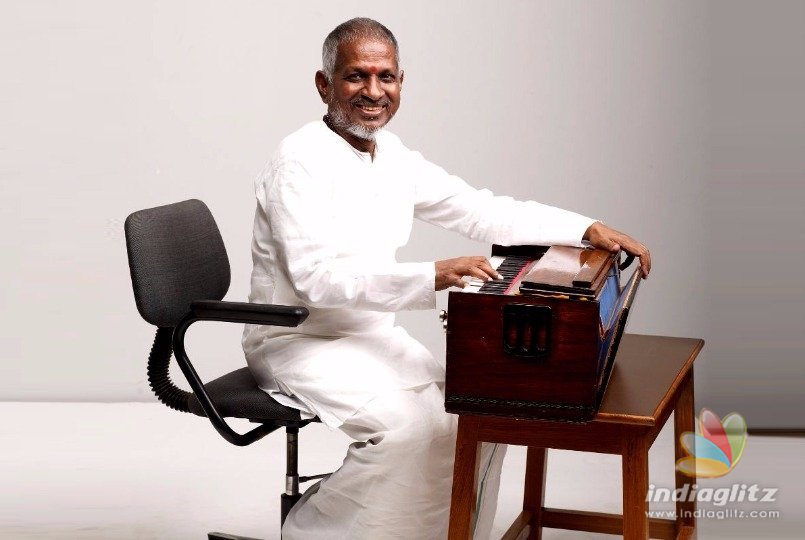
He was one of the
greatest examples and a role model for the future composers in the film industry.
A large number of them began following his works. He also provided a broad platform with the use of Western classical music harmonies for the Indian film industry to build upon. A
lot of the present- day composers still use his music to analyze and help create modern music. Setting as a great motivation, today, all of the film music composers in India are
only men. Women play a very limited role in this category.
Ilayaraja with another amazing composer AR Rahman

Receiving the Padma Vibhushan award
Although a lot of men play
roles in music creations and compositions, majority of the women in the music
field are singers. They are best in covering the high pitch notes where men can’t.
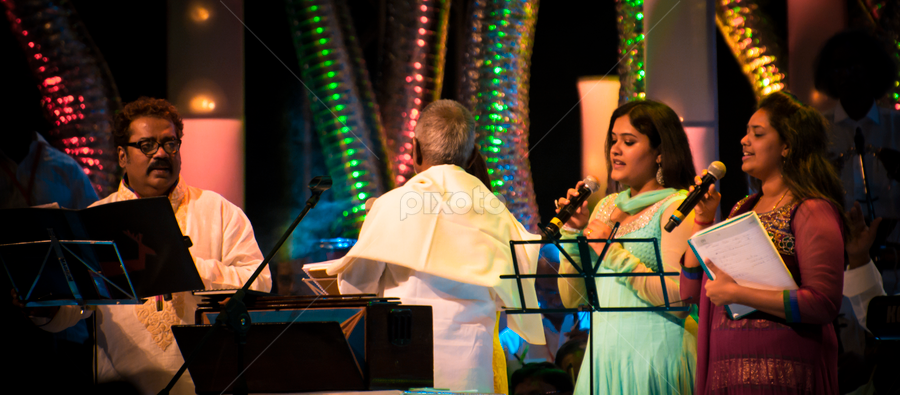
A lot of them are also instrumentalist who played instruments that men don’t usually
play. Some traditional instrument in India are strictly categorized through
stereotypes or by basic logic to fit their role in creating a unique piece of
music. Men usually played percussion instruments and very few string
instruments while women almost only played the string instruments. Some example
of Indian percussion instruments include Mridangam, Ghatam, Dholak, Tabla, etc.
and the string instruments include Sitar, Veena, etc.
Mridangam

Tabla
We can see that none of the above instruments are played by women.
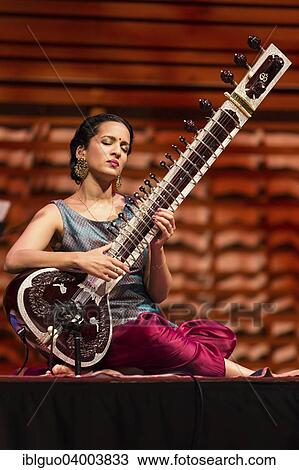
Sitar
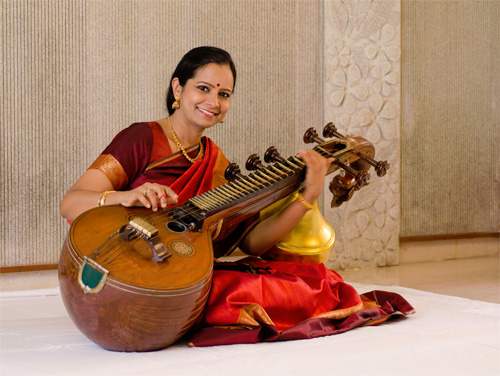
Veena
This a very tradition music concert in Chicago by Ilayaraja. https://www.youtube.com/watch?v=PzNA9LWv0ic. This video clearly shows the role of gender in different aspect of music in India as a whole.

Subscribe to:
Comments (Atom)